Buying guide
The best way to preserve family stories depends on what you already have
Some families need prompts. Some need voice recording. Some need a book made from messy photos, letters, recipes, and memories before details fade.
Best fit
Choose by the kind of memories you already have
These pages are designed to help families compare formats without pressure or vague claims.
Choose prompts
When one storyteller can answer questions steadily over time.
Choose voice
When hearing the person speak is the emotional center.
Choose concierge book design
When the family has mixed materials and wants a finished visual heirloom.
Side by side
What changes in the finished keepsake
Comparison based on public product pages and Loresta's current workflow, checked June 17, 2026.
If you need stories collected, use prompts
Prompt products are helpful when the main challenge is getting someone to tell the stories in the first place.
If voice matters most, record it
Voice-first products can preserve accent, rhythm, laughter, and emotion that written text cannot fully carry.
If the family has scattered memories, organize them into a book
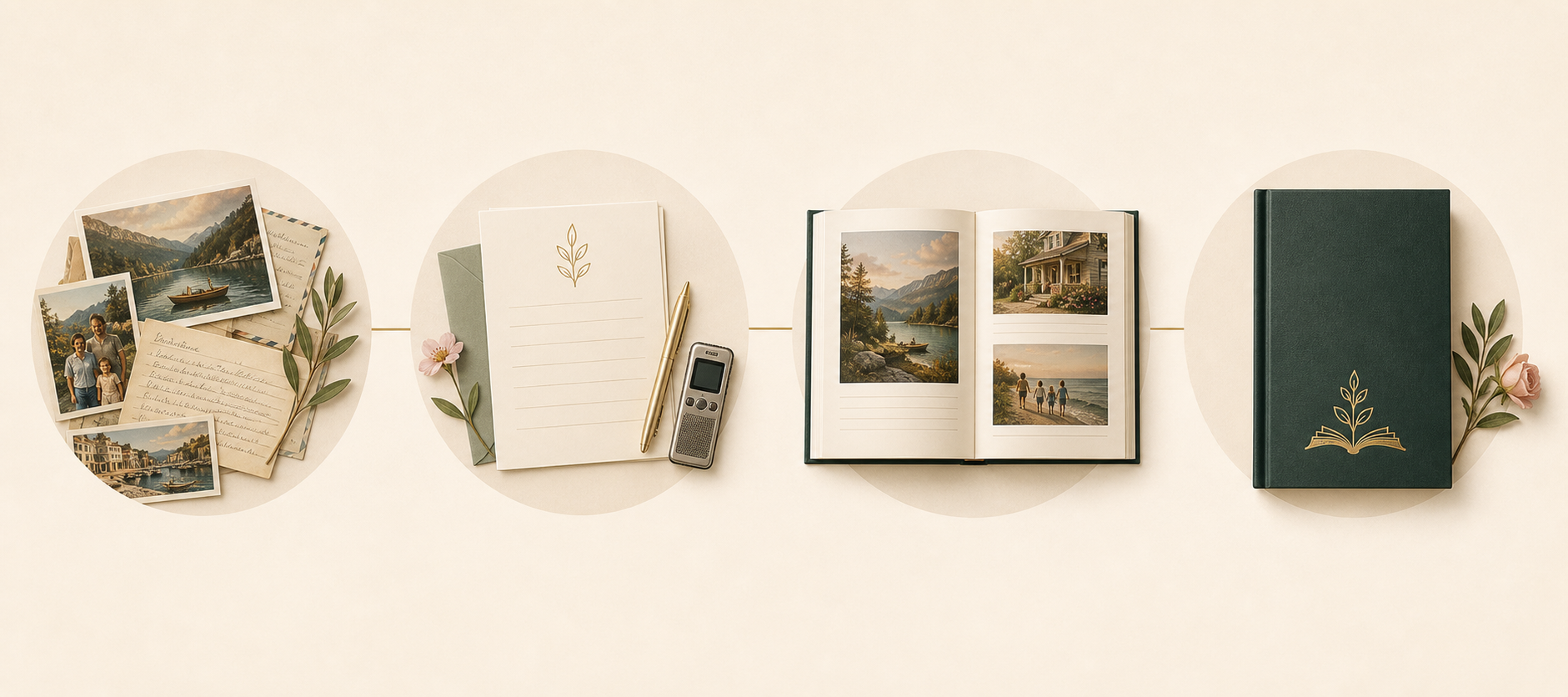
A concierge legacy book can turn photos, letters, notes, recordings, and rough ideas into something the family can understand and keep.
Questions
Before you choose
Short answers for families comparing memory book options.
Should I make a book or a digital archive?
Use a book for the curated story people will revisit. Use a digital archive for extra photos, recordings, files, and future memories.
What if I only have a few photos?
A few meaningful photos are enough to begin. Captions, notes, interviews, and family contributions can fill in the story.
Source references
Public pages used for this comparison
Start simple
Start with what you have and let Loresta shape the story
Upload what you have, choose a direction, and review the proof before print. Loresta can help organize photos, notes, voice memories, letters, captions, and rough ideas.