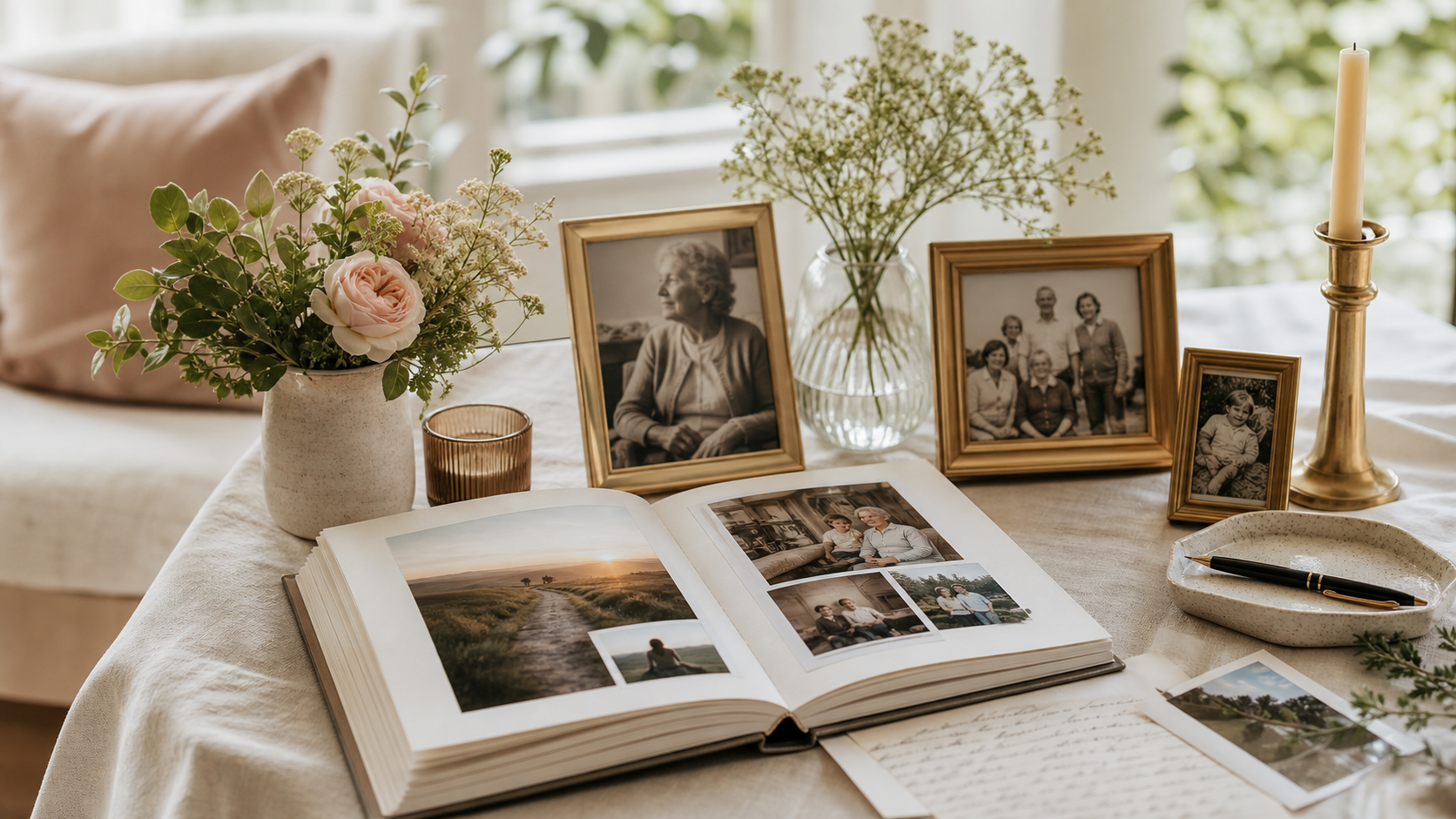
A family memory book works best when it feels less like a scrapbook and more like a guided walk through a life. The photos matter, but the context around the photos is what turns a printed book into an heirloom. Who is in the picture, what season of life was happening, what the family still quotes, and what someone learned along the way are the pieces future generations will look for.
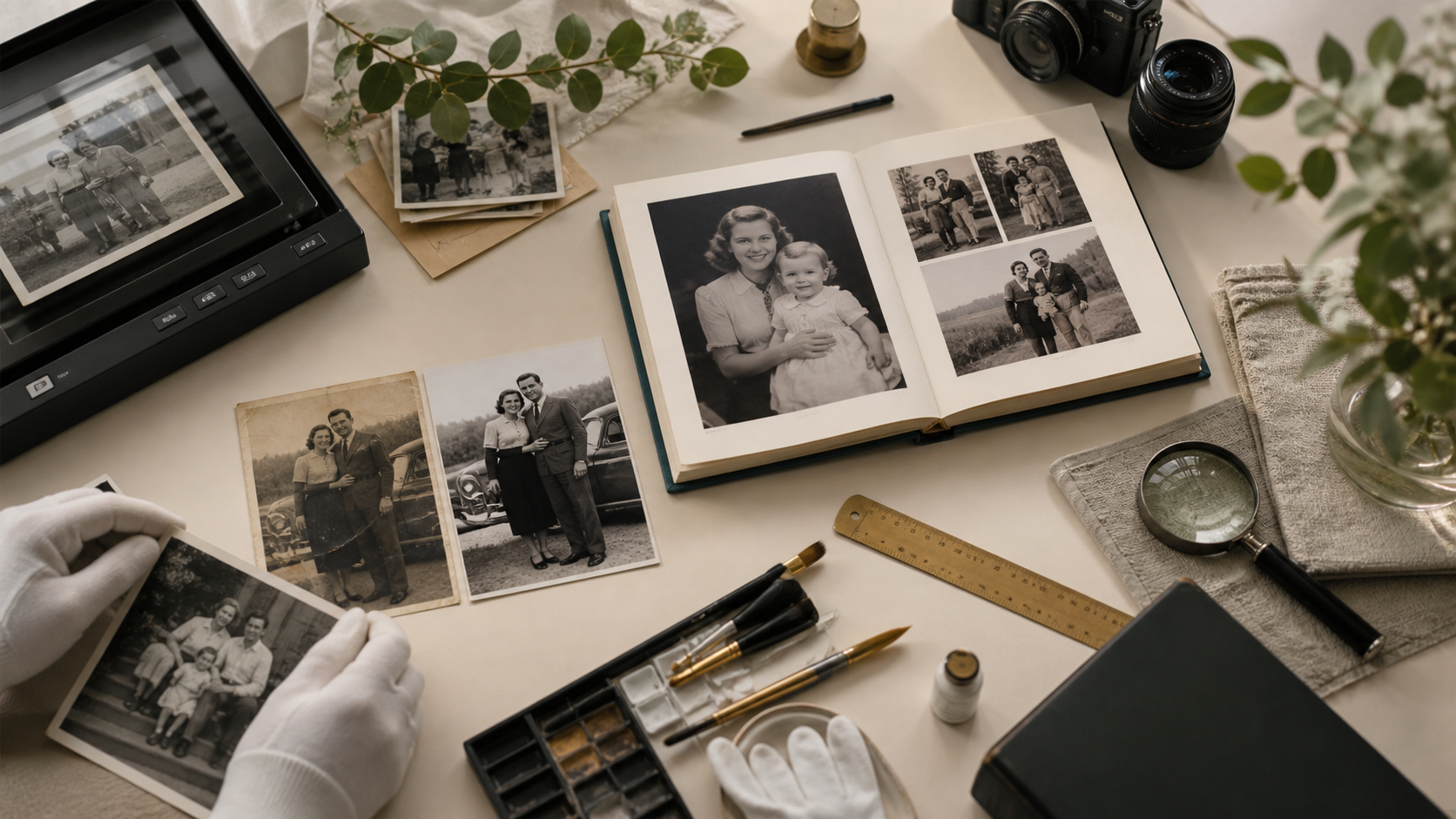
The easiest way to start is not to write a perfect biography. Start by gathering what already exists, then let a simple chapter structure reveal the story. A few photos, short captions, voice notes, scanned letters, recipes, and family memories can become a finished hardcover book when they are organized with care.
Start with the emotional purpose
Before choosing photos or writing chapters, decide what the book should help the family feel. Some books are made to celebrate a grandparent. Some preserve a parent biography before details fade. Some become memorial books after loss. Others turn an anniversary, adoption story, military service, recipe tradition, or family reunion into something permanent.
That purpose shapes every decision. A book for grandchildren may need simple context and family lessons. A memorial book may need more room for quotes, letters, and tender memories. A love story book may focus on places, dates, everyday rituals, and the tiny details that made the relationship real.
- Who is this book for today?
- Who should be able to understand it in twenty years?
- What feeling should someone have when they close the book?
Gather more than photos
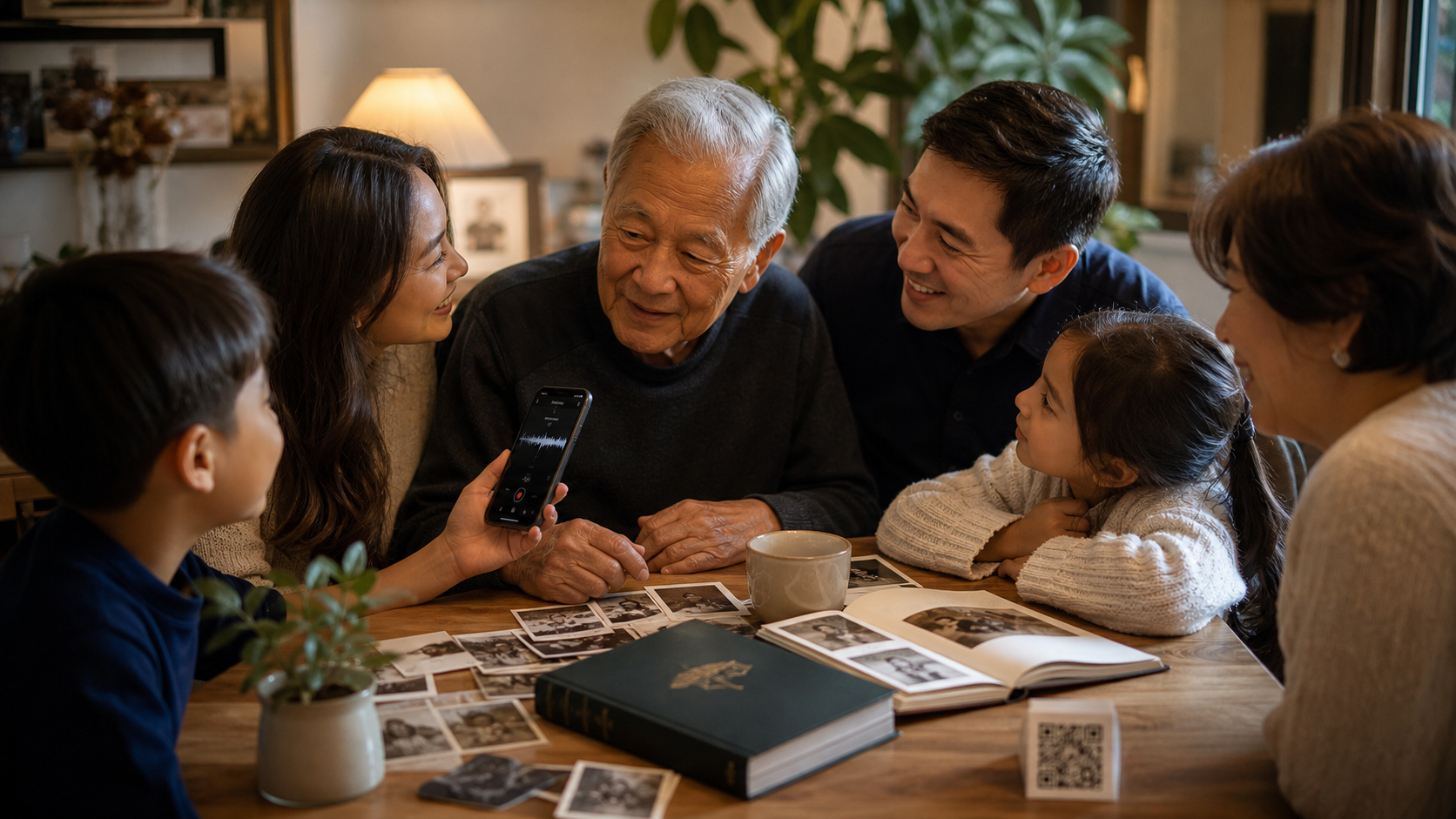
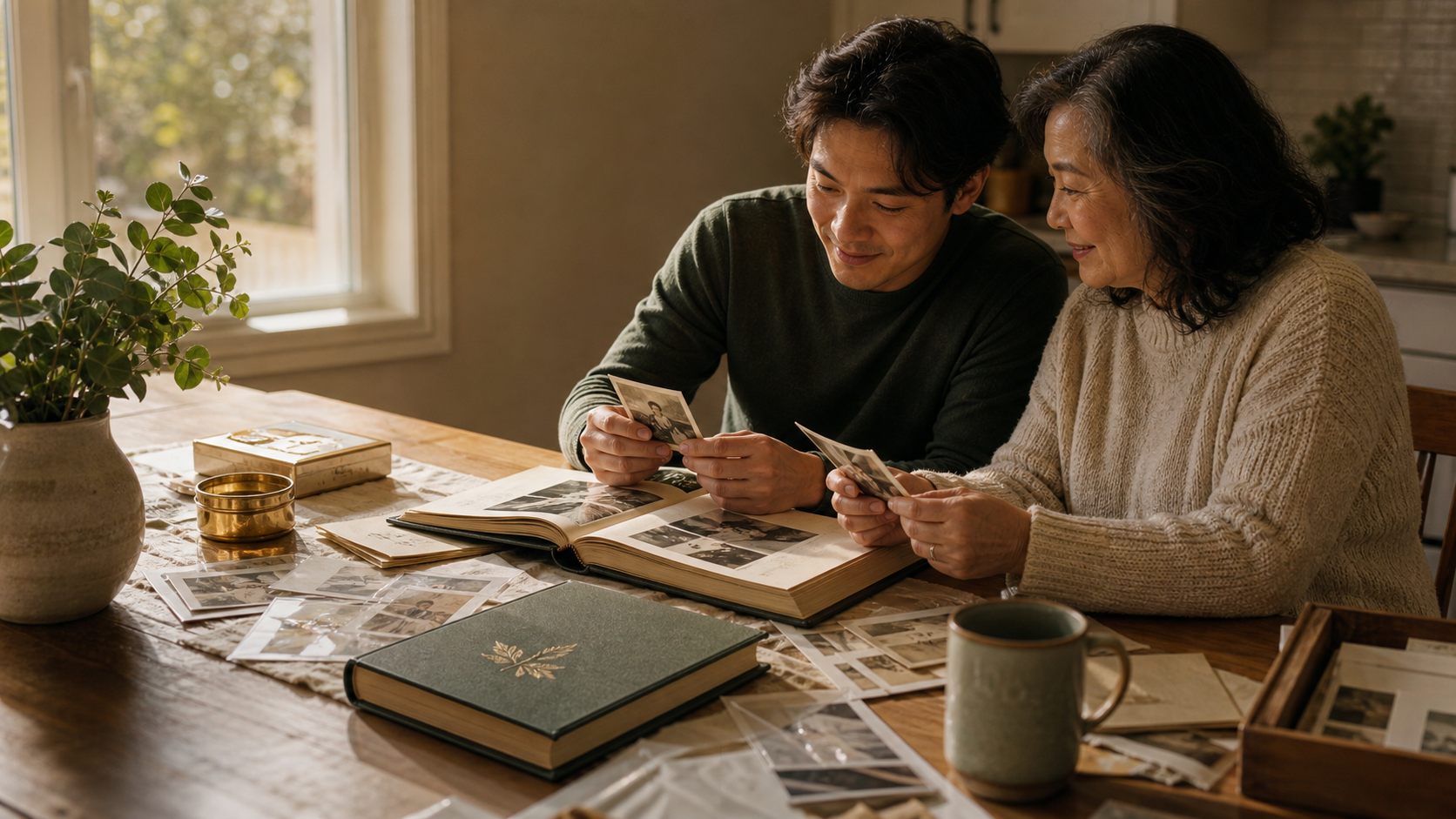
Photos are the anchor, but a strong family memory book includes supporting material. Old letters, text messages, recipes, certificates, newspaper clippings, travel maps, voice recordings, and short family interviews can all become part of the story. The goal is not to include every file. The goal is to choose the material that explains the person behind the images.
If you only have scattered photos, that is enough to begin. A guided process can ask simple prompts around each image: what was happening, who took it, why it matters, what changed after that moment, and what the family still remembers.
Build chapters around meaning
Chronological order is helpful, but it is not the only structure. Many legacy books feel more natural when chapters are built around themes such as childhood, work, love, home, faith, service, recipes, holidays, favorite sayings, lessons, and the people who mattered most.
A good chapter plan keeps the book from feeling like a photo dump. It gives each page a reason to exist and lets the reader move through the story without feeling overwhelmed.
- Early years and family roots
- Love, marriage, and home
- Work, service, and resilience
- Traditions, recipes, and celebrations
- Lessons, letters, and words to carry forward
Use captions as storytelling tools
The best captions do more than label people. They explain why the photo belongs in the book. A caption can name the moment, add a quote, preserve a detail, or connect the image to a larger lesson. Even one sentence can change the value of a picture.
For example, instead of writing only a date and location, a caption can say that this was the first apartment after moving across the country, the table where every birthday cake was made, or the backyard where cousins learned the family stories by listening after dinner.
Let AI help, but keep the family voice
AI can help turn rough notes into clean paragraphs, restore confusing timelines, suggest chapter names, and draft captions from short prompts. The key is to treat AI as an assistant, not the author of the family. Real memories, family phrases, and review from someone close to the story keep the book honest.
A strong workflow lets the family upload imperfect material, explain the emotional goal in plain language, and then review the organized draft before print. That keeps the process easy without losing control.
Family memory book starter checklist
- Choose the person, couple, or family story the book will preserve
- Gather 30 to 80 meaningful photos before worrying about order
- Add letters, recipes, voice notes, videos, and text messages if you have them
- Write short notes beside the most important images
- Pick a chapter structure before designing pages
- Review every name, date, and relationship before printing
Frequently asked questions
How many photos do I need for a family memory book?
You can begin with as few as 25 meaningful photos. A fuller hardcover book often uses 50 to 150 images, but the story quality matters more than the count.
Can a memory book include videos or voice recordings?
Yes. Printed pages can include QR codes that link to private videos, voice recordings, interviews, or digital archive folders.
Make it real
Let Loresta shape your memories into a finished legacy book
Send photos, notes, voice recordings, letters, and rough ideas. We help organize the story, improve the presentation, write captions, and prepare a book your family can review before print.
Start a book