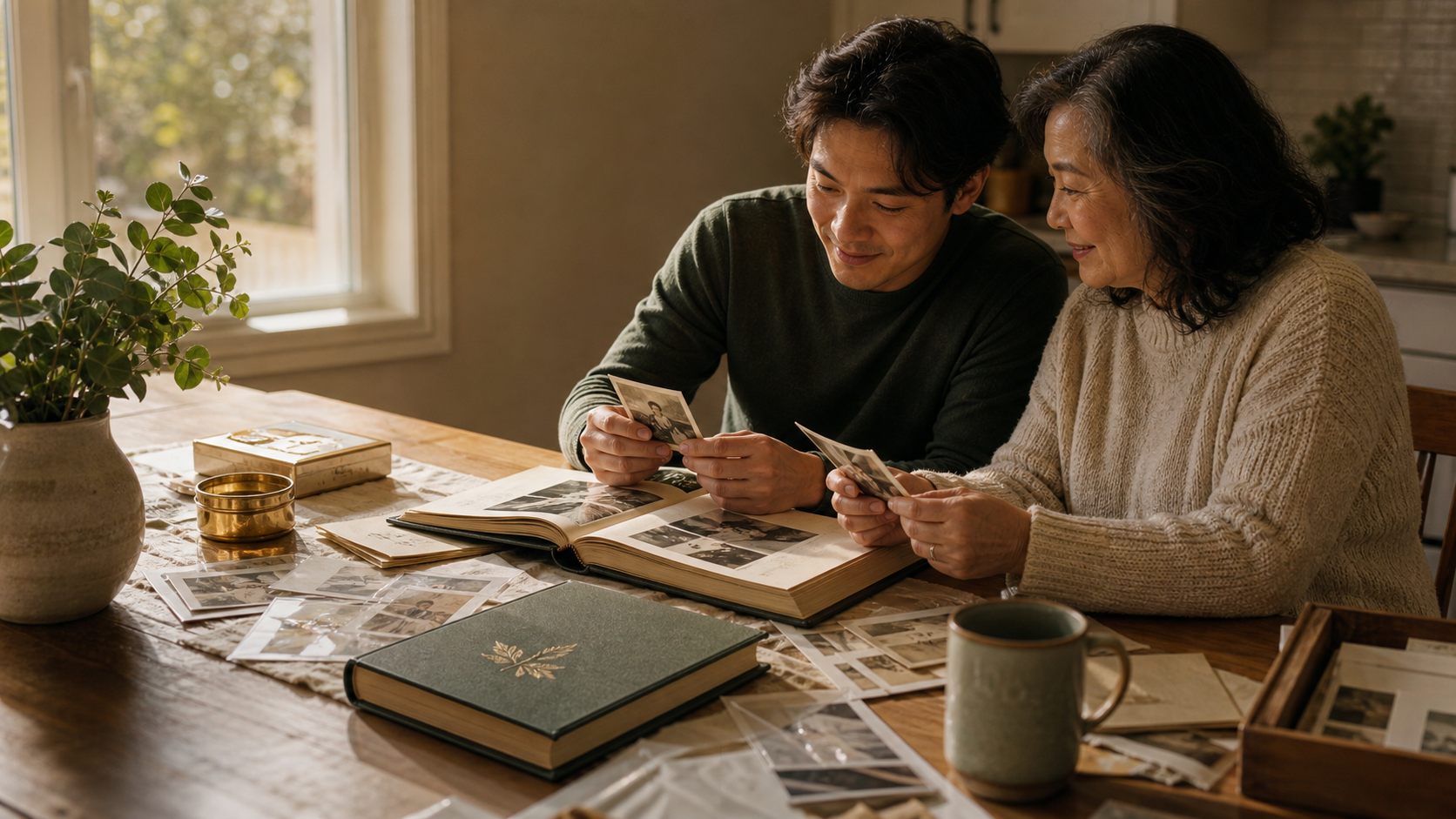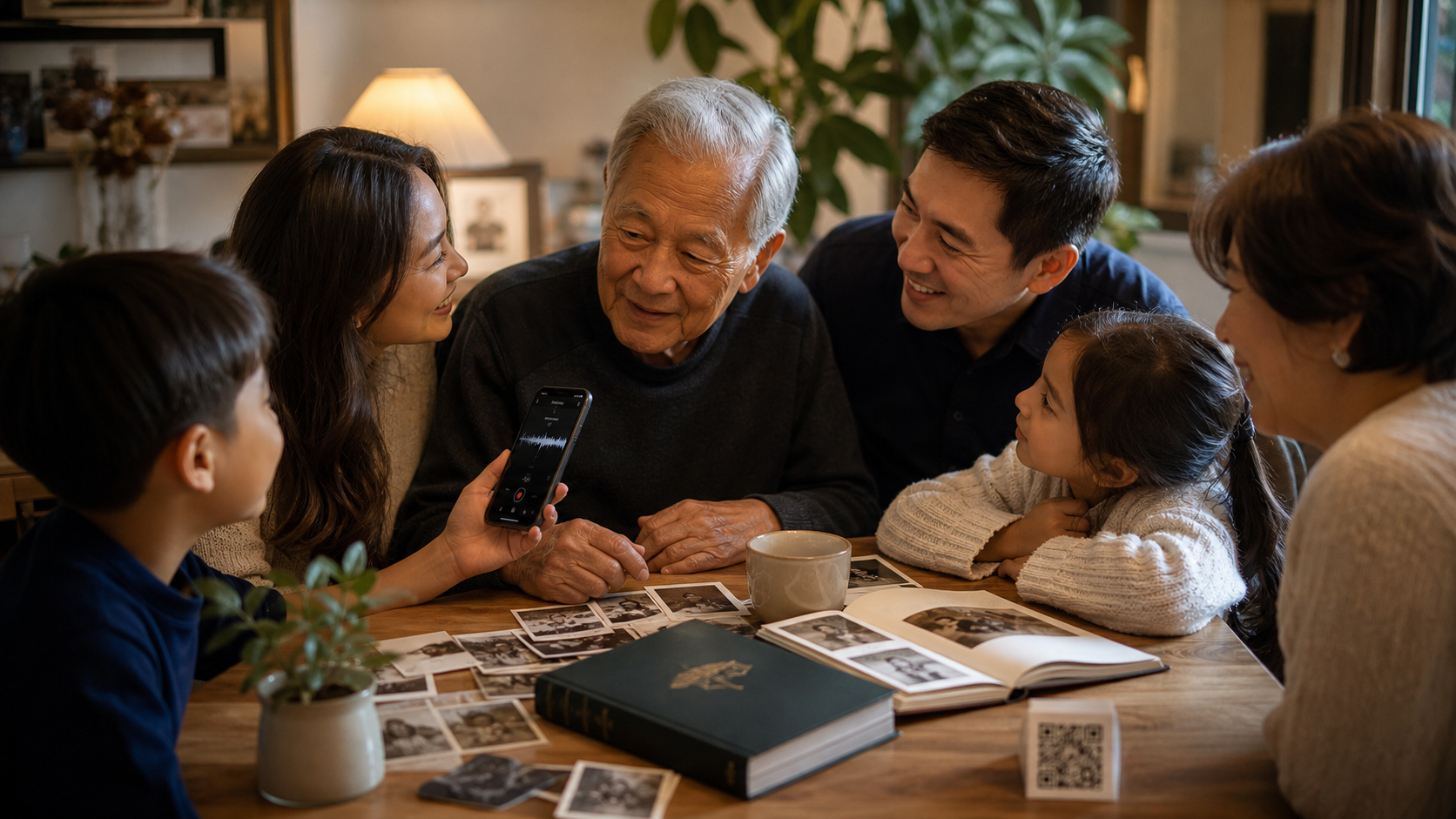
Oral history is one of the fastest ways to save family memories before they fade. Many people do not sit down to write their life story, but they can answer a good question over coffee. A voice recording captures not only what they say, but how they say it, the pauses, laughter, accent, rhythm, and emotion.
A strong family interview does not need studio equipment. It needs a quiet room, a few thoughtful prompts, permission to record, and a plan for turning the answers into captions, chapters, timelines, and QR codes inside a printed legacy book.
Begin with easy memory doors
Do not start with the biggest question. Asking someone to summarize their whole life can feel intimidating. Start with concrete memory doors: a childhood home, a favorite meal, a first job, a school routine, a holiday, a neighbor, a song, or a photo on the table.
Specific questions produce better stories because they give the person somewhere to stand. Once they begin, follow the details. The best part of an interview is often the unexpected side road.
- What did your childhood kitchen smell like?
- Who was the funniest person in your family?
- What did a normal Saturday look like when you were young?
- What family rule did everyone know?
Ask for scenes instead of summaries
A summary says someone was hardworking. A scene shows them waking before sunrise, packing lunch in wax paper, and coming home with dust on their boots. Scenes are easier to turn into a family history book because they give the reader something to picture.
When an answer sounds broad, ask for an example. When someone says their mother was generous, ask about a time they saw it. When they say a place felt like home, ask what was on the walls, who sat where, and what sounds filled the room.
Record clean audio without making it awkward
Use a phone recorder, place it close enough to hear clearly, and tell everyone when recording starts. Avoid noisy restaurants, fans, televisions, and clinking dishes. If someone gets nervous, remind them the recording can be edited and does not need to be perfect.
Long recordings are fine, but short chapters are easier to use. Ten focused recordings of fifteen minutes each can be more useful than one three-hour file.
Turn recordings into book material
After recording, the audio can become several things: a transcript, a chapter draft, a quote pullout, a timeline entry, a caption, or a QR code. The printed book can preserve the story in written form while the digital archive preserves the original voice.
This is where AI-assisted organization can save families time. A rough transcript can be cleaned, grouped by theme, and turned into readable text while the family reviews for accuracy and voice.
Protect the private parts
Not every memory belongs in a printed book. Some stories are private, painful, or better kept for a smaller audience. Decide what is meant for the family book, what belongs in a private digital archive, and what should be left out.
A respectful oral history process gives the storyteller control. They should know how the recording will be used and have the chance to review sensitive material.
Best questions to ask before recording
- Where did you feel most at home as a child?
- Who shaped you the most?
- What family tradition should never disappear?
- What was a hard season that taught you something?
- What recipe, song, saying, or habit feels like our family?
- What do you hope younger generations understand?
Frequently asked questions
How long should a family history interview be?
Plan for 30 to 60 minutes, but break the project into multiple shorter recordings if possible. Short sessions are easier to review and organize.
Can voice recordings go inside a printed book?
The audio itself stays digital, but a printed book can include QR codes that open private voice clips, videos, or interview recordings.
Make it real
Let Loresta shape your memories into a finished legacy book
Send photos, notes, voice recordings, letters, and rough ideas. We help organize the story, improve the presentation, write captions, and prepare a book your family can review before print.
Start a book