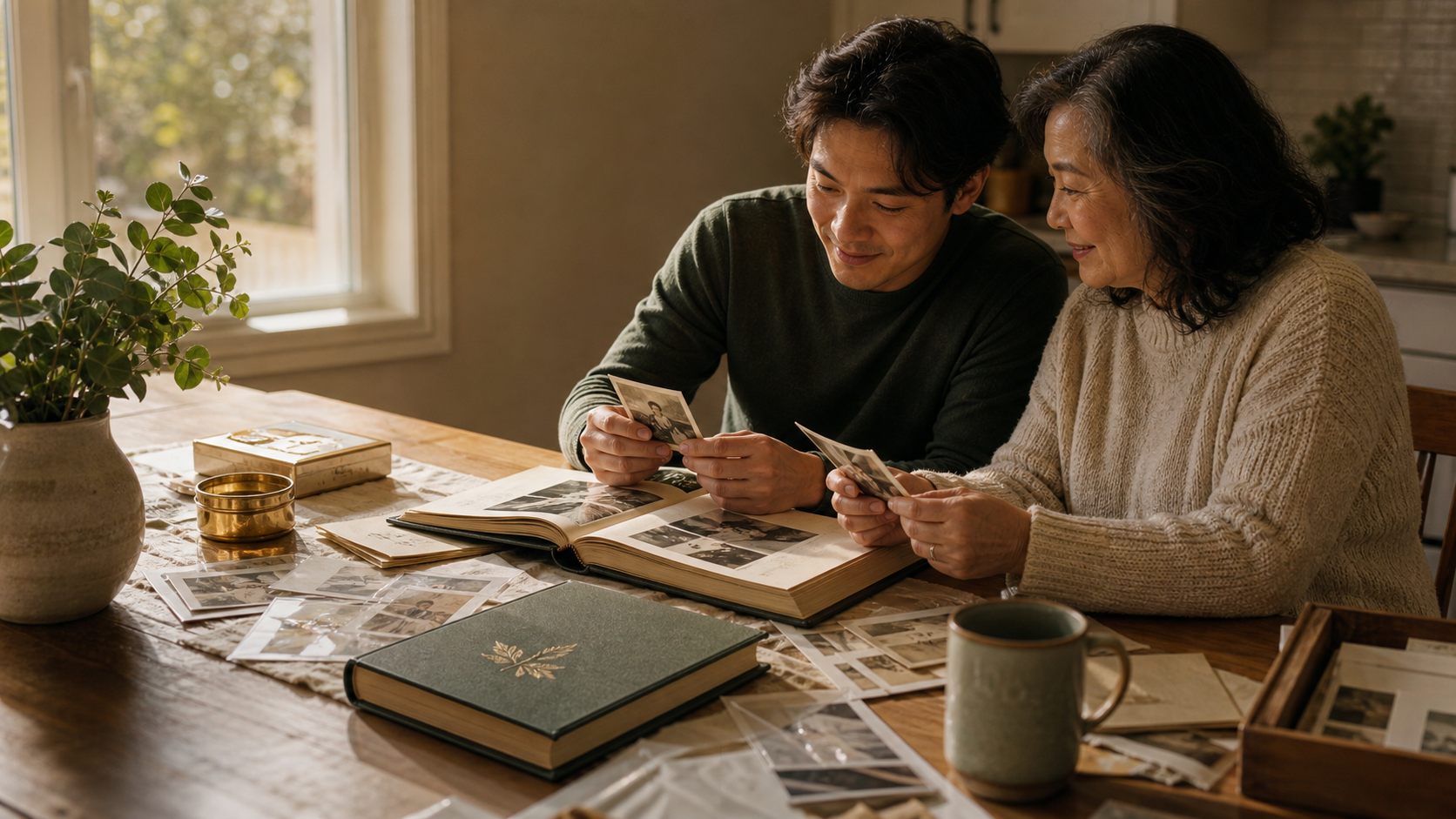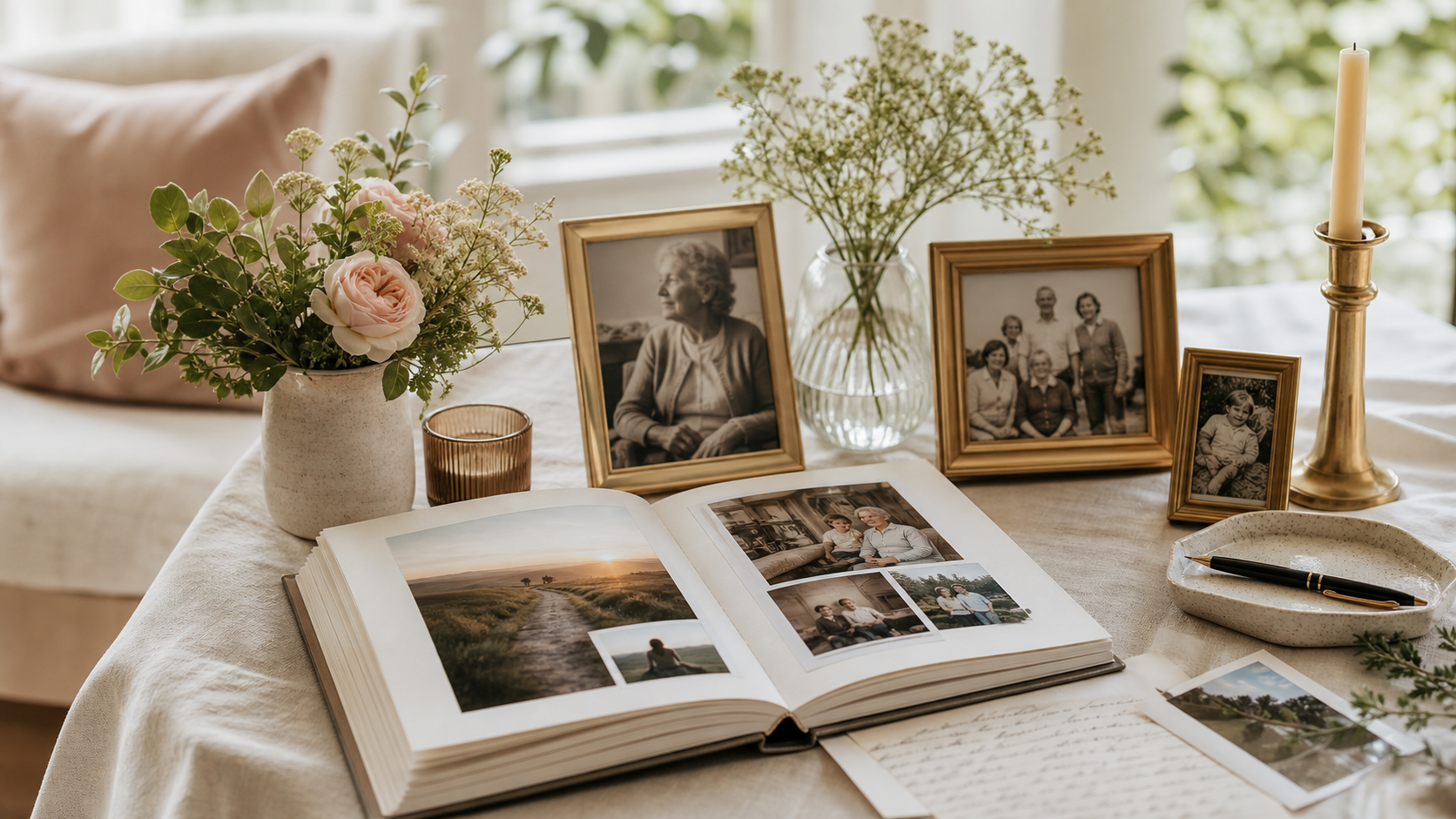
A memorial legacy book can hold the parts of a person that a service program or social post cannot. It gives the family a place for photos, favorite stories, handwritten notes, small rituals, recipes, voice memories, and the everyday details that made someone deeply loved.
The most meaningful remembrance books are not built from perfect materials. They are built from honest memories. A blurry kitchen photo, a voicemail, a recipe card, a note in familiar handwriting, or a small story about how someone made people feel can become the page that matters most.
Choose a tone that feels true
Some memorial books are quiet and tender. Others are joyful, colorful, and full of funny stories. The right tone depends on the person and the family. A book for a grandparent who loved gardening may feel warm and rooted. A book for a parent may include lessons, letters, and a deeper life story. A book for a pet can hold routines, favorite places, and the comfort they brought into the home.
Do not force the book to feel formal if the person was playful. Do not make it overly cheerful if the family needs space for grief. The design should respect the emotional truth of the story.
Collect stories from more than one voice
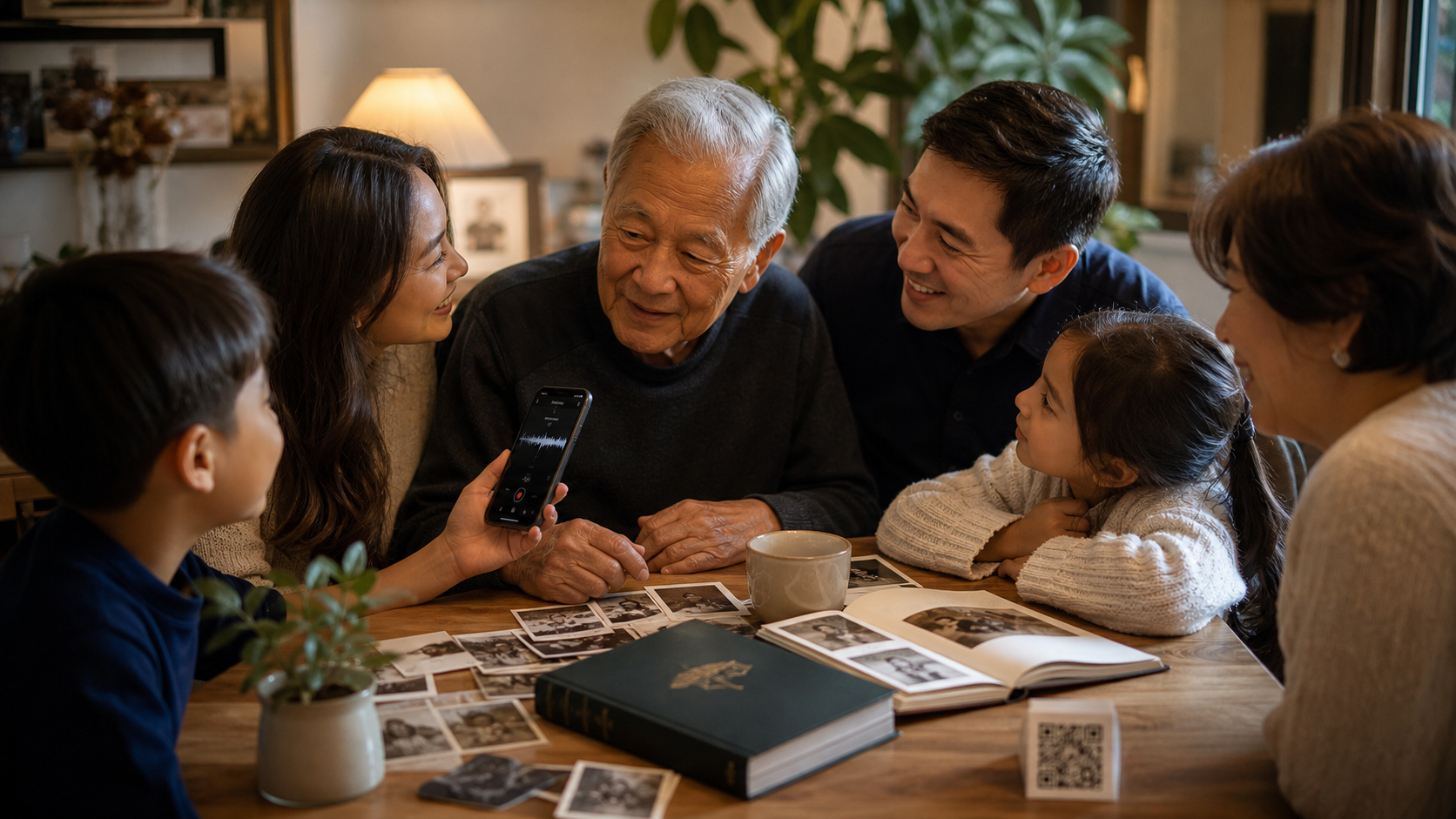
A memorial legacy book becomes richer when it includes memories from different people. One person may remember childhood stories. Another may remember work ethic, humor, recipes, faith, music, or the way the person showed up in hard times. Together, these small perspectives create a fuller picture.
Ask contributors for short, specific memories rather than polished essays. Specific prompts make it easier for people to answer during grief.
- What is a moment with them you never want to forget?
- What did they teach you without making it a lesson?
- What phrase, recipe, habit, or tradition still feels like them?
- What photo best shows their personality?
Include everyday evidence of love
Formal portraits are beautiful, but everyday evidence often carries more emotion. A handwritten grocery list, a favorite chair, a garden bed, a worn cookbook, a fishing hat, a pet bowl, a workbench, or a familiar coffee mug can help future generations understand the shape of daily life.
These details help the book avoid feeling like a timeline only. They make it feel lived in.
Use QR codes for voice and video
If the family has voicemails, home videos, speeches, songs, or interview clips, QR codes can give the printed book another layer. A page can show a photo and a short caption, while the QR code opens the sound of their voice or a private video memory.
For privacy, these links should be organized intentionally. Families should know what is public, what is private, who can access it, and how long it will be maintained.
Review slowly and kindly
Memorial projects can be emotional. Build in time to review names, dates, captions, and sensitive wording. Let one trusted person check for accuracy and another check for tone. The book should feel comforting, not rushed.
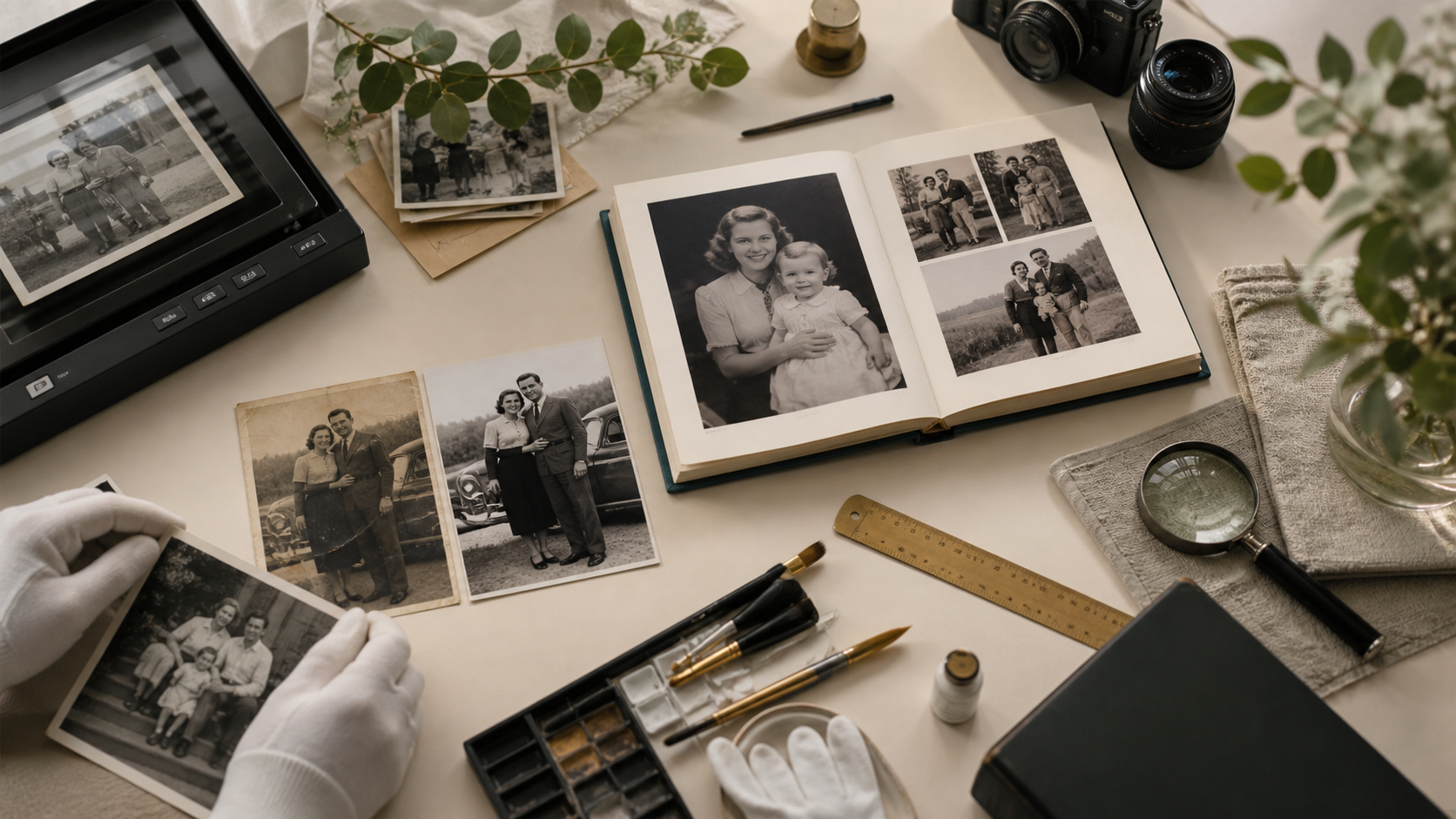
A thoughtful process can also help families who do not know where to begin. They can upload what they have, explain the person in a few sentences, and let the first draft take shape before deciding what to add.
What to include in a memorial legacy book
- A short opening note about why the book was made
- Favorite photos from different seasons of life
- Stories from family and friends
- Quotes, sayings, recipes, songs, and traditions
- Letters, notes, or handwriting samples
- Optional QR codes for voice recordings or videos
- A closing section with lessons and love carried forward
Frequently asked questions
Is it too soon to make a memorial book?
There is no fixed timeline. Some families start right away because organizing memories helps them grieve. Others wait months. A gentle upload-first process can let you begin without finishing immediately.
Can a memorial book be a gift?
Yes. Memorial books are often meaningful gifts for parents, siblings, children, or close friends, especially when they include stories from multiple people.
Make it real
Let Loresta shape your memories into a finished legacy book
Send photos, notes, voice recordings, letters, and rough ideas. We help organize the story, improve the presentation, write captions, and prepare a book your family can review before print.
Start a book