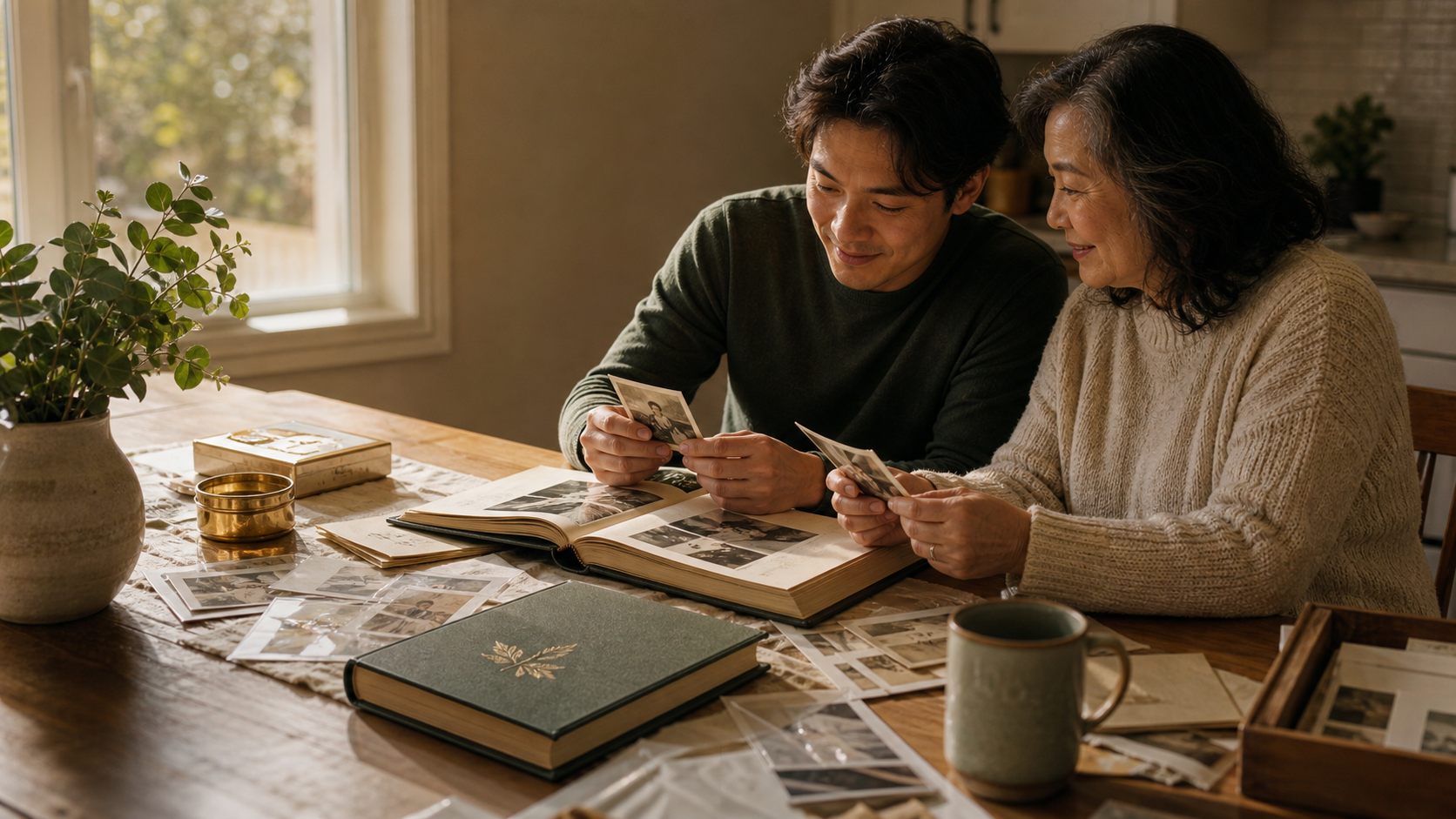
Family recipes are rarely just instructions. They are the smell of a kitchen, the person who never measured, the holiday everyone waited for, the dish that appeared after a hard week, and the handwritten card with stains from years of use.
A family recipe memory book preserves both the food and the stories around it. It can include recipes, photos, kitchen memories, ingredient notes, holiday traditions, and the voices of the people who made the table feel like home.
Preserve the story behind the recipe
A standard cookbook tells someone what to cook. A legacy cookbook tells them why the recipe mattered. Who made it first? When was it served? What did the kitchen feel like? Who always asked for seconds? What changed over time?
These details make the recipe useful and emotional. Future generations may follow the instructions, but they will treasure the story.
Photograph the evidence
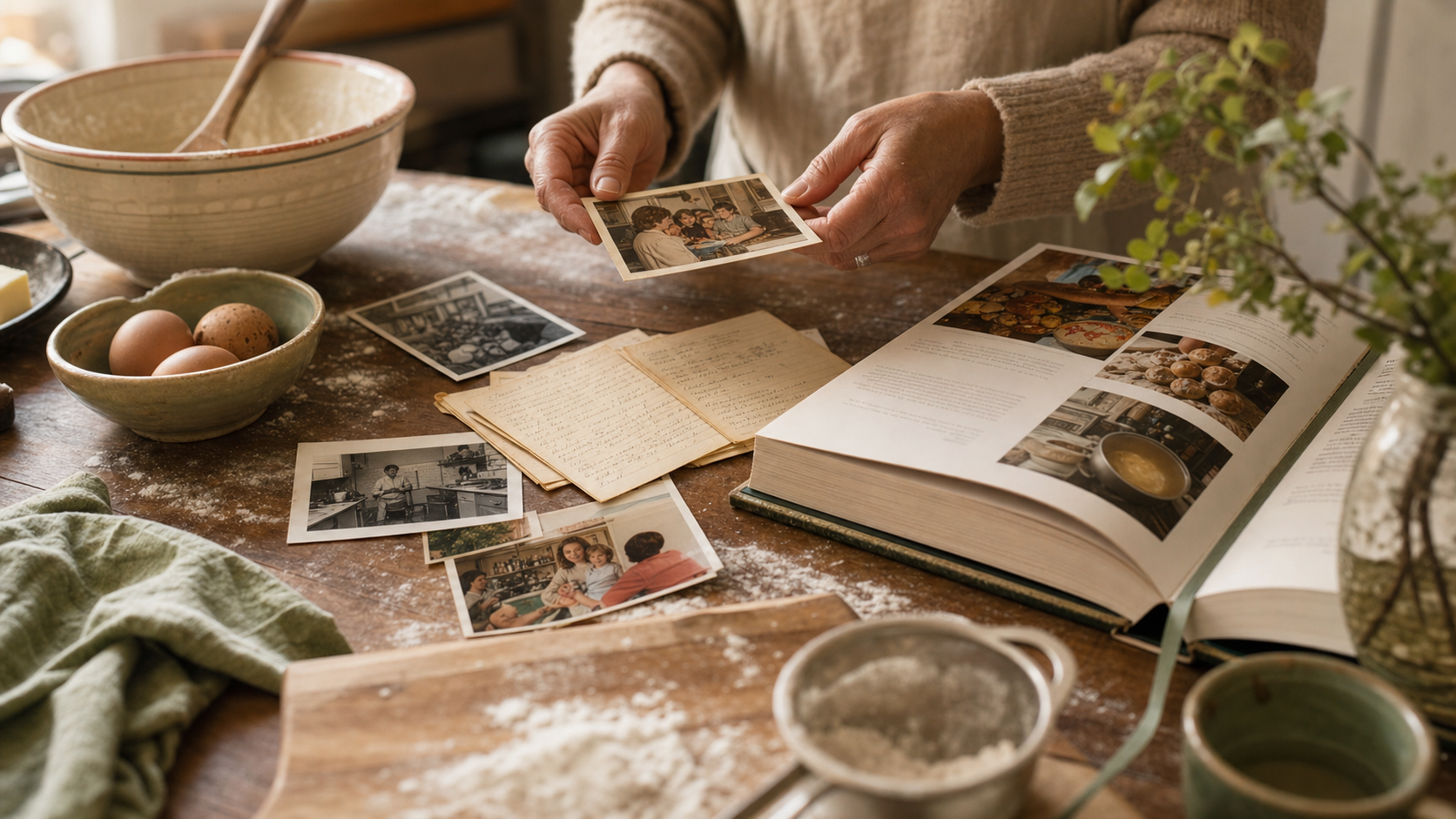
Do not only photograph the finished dish. Capture the recipe card, the mixing bowl, the cookbook margin notes, the apron, the table, the hands making it, and the family photos connected to the tradition. These supporting images make the chapter feel tactile.
If a recipe card is hard to read, scan it and transcribe the instructions beside the original image. That keeps the handwriting while making the recipe usable.
Create sections by occasion
Recipe memory books work well when organized by family rhythm. Breakfasts, holidays, Sunday dinners, birthdays, comfort food, garden recipes, celebration meals, and recipes from specific relatives can each become a section.
You can also organize the book by person. A chapter for Grandma's kitchen, Dad's grill, Aunt Maria's desserts, or the recipes kids learned first can make the book feel personal.
Add memory prompts beside recipes
Prompts help relatives contribute even when they do not know how to write a full story. Ask what they remember eating, who made it, what the house sounded like, and what small ritual surrounded the meal.
Short answers can become captions, quote blocks, or sidebars in the final book.
- What dish meant home to you?
- Who taught this recipe?
- What did this meal celebrate?
- What ingredient or step was never written down?
Keep the book usable
A beautiful recipe memory book should still function. Use clear ingredient lists, tested instructions where possible, notes about substitutions, and enough white space for reading in the kitchen. If the recipe is approximate, say so with warmth.
The charm is often in the imperfection, but the reader still needs enough guidance to recreate the memory.
What to gather for a recipe memory book
- Handwritten recipe cards and cookbook pages
- Photos of meals, kitchens, tables, and the people who cooked
- Stories about holidays, Sunday dinners, and special dishes
- Ingredient notes, substitutions, and family shortcuts
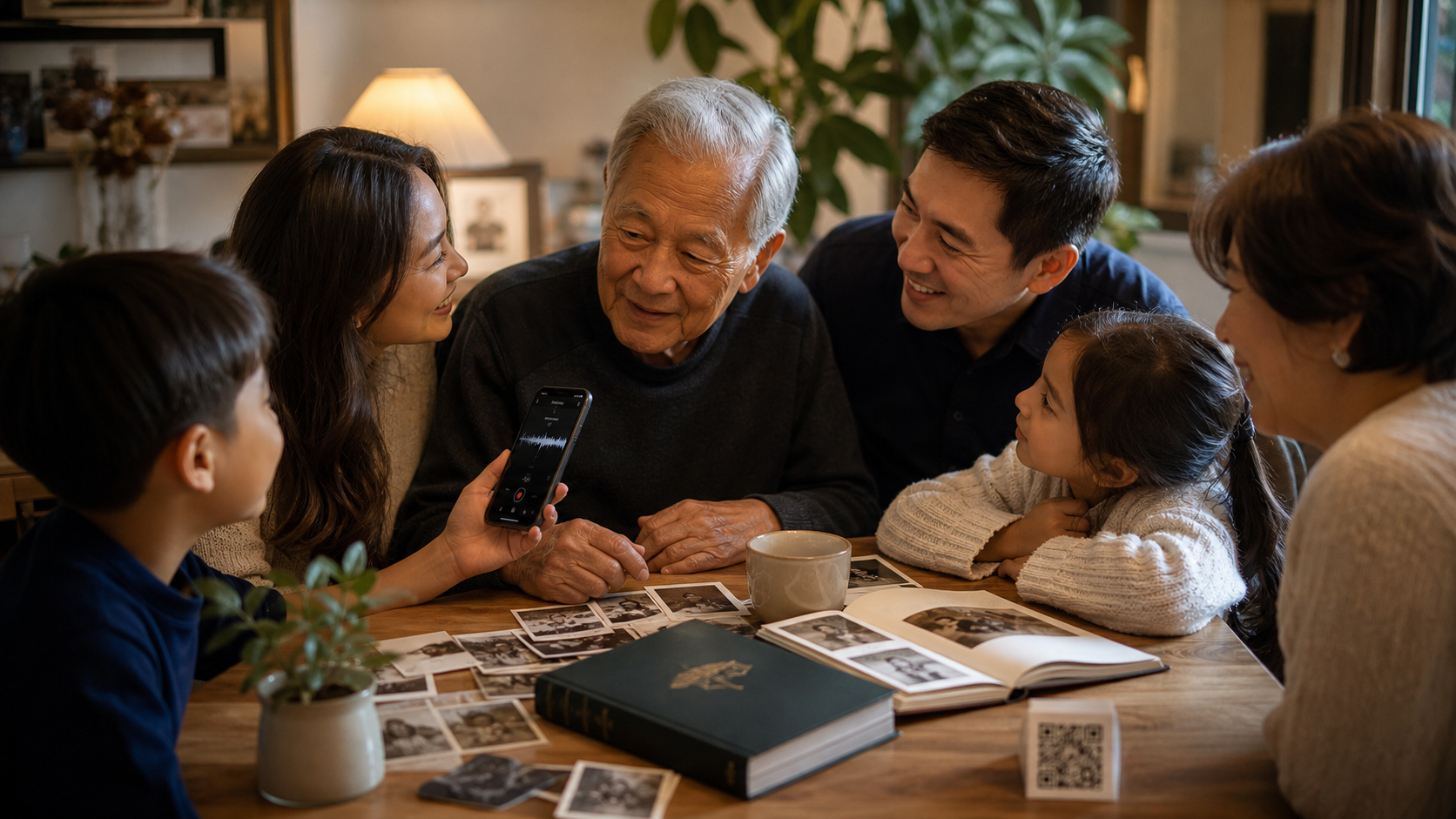
- Voice recordings of relatives explaining recipes
- A few favorite quotes about food and family
Frequently asked questions
Can a recipe book include stories and photos?
Yes. A recipe memory book is strongest when recipes sit beside photos, captions, kitchen memories, and family traditions.
What if the recipe was never written down?
Interview the person who makes it, record the process, estimate measurements, and label the recipe as family-style or approximate.
Make it real
Let Loresta shape your memories into a finished legacy book
Send photos, notes, voice recordings, letters, and rough ideas. We help organize the story, improve the presentation, write captions, and prepare a book your family can review before print.
Start a book